












Honoring the 250th anniversary of the United States, America250 is a nationwide commemoration celebrating the stories, people, and places that shaped our nation’s fight for independence. As part of this effort, North Carolina is highlighting its own pivotal role in the American Revolution—from the Halifax Resolves to key battles, retreats, and leadership that influenced the outcome of the war.
Rockingham County is proud to contribute to this statewide and national story. Even before the county was officially formed, the landscapes of present-day Rockingham played a critical role in the Southern Campaign of the war. From river fords and ironworks to mustering grounds and strategic encampments, Continental and British forces moved across.
Today, these Revolutionary-era stories remain reflected in Rockingham County’s rolling hills, waterways, and historic sites—inviting visitors to explore the places where America’s path to independence unfolded.
The 2nd North Carolina Regiment served as a critical force in the American Revolution, shifting between the Northern and Southern armies as the needs of the Continental Army evolved.
One of North Carolina’s most influential Revolutionary leaders – and the first governor in the United States to officially recognize the Fourth of July as a holiday – Alexander Martin holds a special place in Rockingham County’s history.
Martin began his service as a lieutenant colonel in 1775, joining the Continental Army in its earliest days. He fought in several key engagements, including Sullivan’s Island, Brandywine, and Germantown. Though illness and the hardships of war led him to resign his commission, Martin remained committed to independence.
He quickly entered state politics, serving on crucial wartime councils that shaped North Carolina’s military response. In 1781, following the capture of Governor Thomas Burke, Martin became acting governor, and the following year, he was elected Governor of North Carolina, serving from 1782 to 1785, leading North Carolina through the final stages of the American Revolution. He later returned to the office for a second term (1789–1792).
One of North Carolina’s most influential Revolutionary leaders – and the first governor in the United States to officially recognize the Fourth of July as a holiday – Alexander Martin holds a special place in Rockingham County’s history.
Among his lasting achievements, Martin helped charter the University of North Carolina, supported the establishment of Raleigh as the permanent state capital, and welcomed President George Washington during the President’s Southern Tour.
In 1798, he returned to his Rockingham County home, “Danbury.” He returned once more to public service in 1804 and 1805, serving again in the state Senate and as Speaker during his last term. Martin died at Danbury on November 2, 1807.
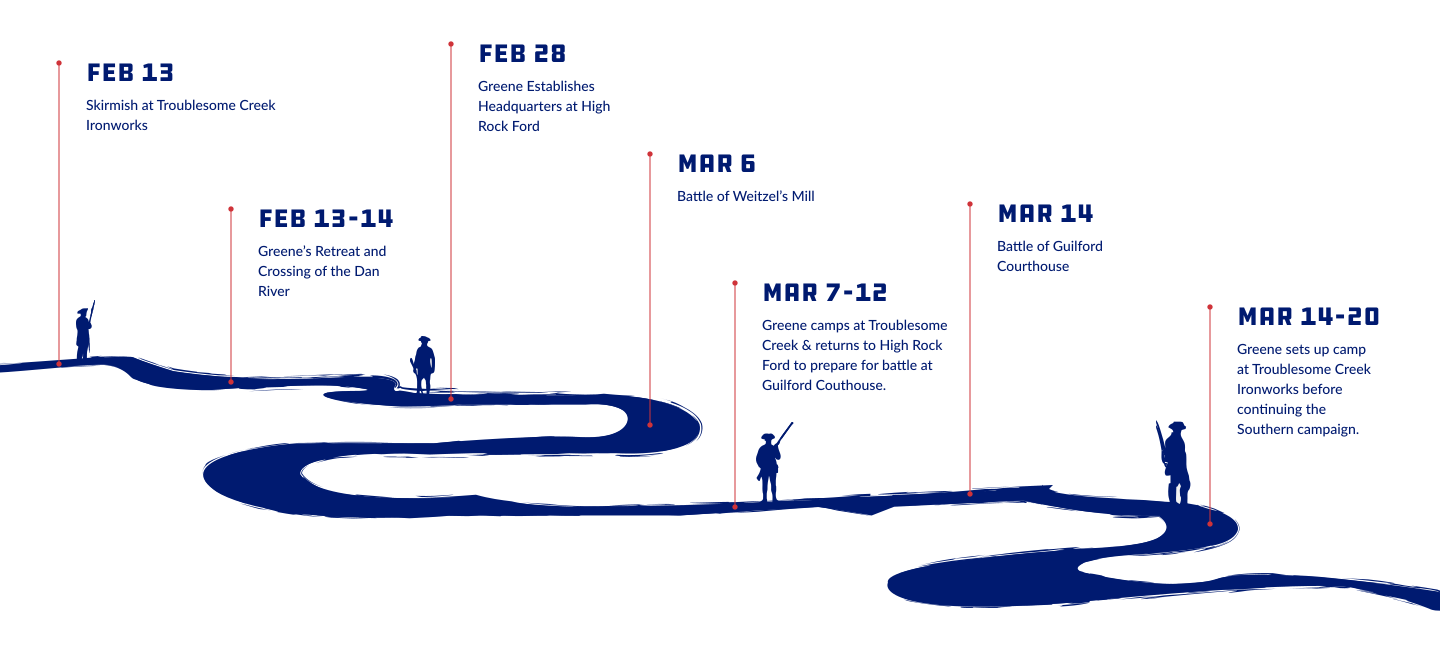
Rockingham County’s landscape supported the dramatic maneuvers of 1781, when Continental and British forces moved across this region in the weeks leading up to and following the Battle of Guilford Courthouse.
Troublesome Creek Ironworks served as a recurring campsite for General Nathanael Greene and British cavalry commander Banastre Tarleton during the Race to the Dan. Greene returned here after the Battle of Guilford Courthouse to regroup and reestablish his command structure.
Nearby, High Rock Ford played a significant tactical role, providing a key river crossing along the Haw River. Greene established his headquarters here twice—first to reorganize his officers after reentering North Carolina, and again to prepare his troops for the Guilford Courthouse engagement.
These sites, along with other mustering points and fords, formed the backdrop to one of the most dynamic and consequential chapters of the Southern Campaign.
Credit : “Race to the Dan” map. Americana Corner.
The “Race to the Dan” remains one of the most brilliant strategic retreats in military history—and much of it unfolded across what is now Rockingham County. Greene’s army skillfully navigated this region’s rivers, fords, and rolling terrain to evade British forces and cross safely into Virginia for reinforcements.
Today, the same waterways that shaped the Southern Campaign offer beautiful opportunities for recreation. The Dan River invites visitors to paddle, fish, and explore, while nearby trails and scenic overlooks connect modern outdoor experiences to the historic landscape that once influenced the fate of a nation.
Walk—or paddle—in the footsteps of history. This curated itinerary highlights Rockingham County’s Revolutionary War sites, offering a meaningful journey through landscapes used by Continental soldiers, local militia, and early state leaders.